
How to Have an Educational Family Day Out in London (Without Anyone Feeling Like They’re Back at School)
Let’s be honest. You can count the number of older kids and teens who get excited by the phrase “an educational day out” on the fingers of a mitten. Basically, it sounds suspiciously like homework disguised as a family outing. Cue eye rolls, dramatic sighs and the classic line: “Is this going to be boring?”
The good news is that if you’re a parent wanting to combine some fun with some learning, a trip around London can be a surprisingly easy solution. I run KidRated, the family review platform where real kids rate days out, so I’ve spent years learning about exactly which spots actually keep them engaged.
The city is packed with places where history, literature, science and culture come alive through stories, sights and experiences rather than textbook facts. Done well, a London day out can connect beautifully with what kids are studying at school without ever feeling like a lesson. And there’s another secret ingredient that helps enormously: great guides.
Across London you’ll find brilliant storytellers bringing the city’s past to life. Not just in museums, but on sightseeing buses, river cruises, theatre tours, stadium tours and especially immersive historical attractions like The London Dungeons, where actors perform history instead of simply explaining it.
Many of us turn up and hope for the best, but a great guide can turn a dusty fact into a gripping story about real people, real drama and sometimes some very strange moments in the past. And suddenly your kids are gripped, often without realising they’re learning anything at all. Our favourites are in the Houses of Parliament who we think do some the best guided tours in London.
In the meantime, if you’re thinking about planning a London outing that’s interesting, memorable and quietly educational, here are some excellent places to consider.
Start With the Stories of the City
One of the easiest ways to introduce teenagers to London’s history is simply to let the city tell its own story. That’s where a bus sightseeing tour or a guided Thames river cruise with City Cruises can work brilliantly. “Aren’t they just for overseas tourists?” I hear you ask. No, they’re not - they’re one of our best kept secrets because they’re relaxed, cover a lot of ground, and are brilliantly flexible.
On a river cruise, for example, guides explain how the Thames shaped the development of the city from Roman trading routes to medieval commerce and the modern skyline. As you glide past landmarks like the Tower of London, St Paul’s Cathedral and the Houses of Parliament, the stories start connecting together in a way that textbooks rarely manage. For teens who might not be thrilled by the idea of “history”, it’s an easy and surprisingly engaging introduction. Top Tip: Try one of the after dark trips - it’s an Instagrammer’s paradise.
Tower Bridge Experience - Engineering with a Wow Factor
Few London landmarks manage to combine spectacle and education quite like the Tower Bridge Experience. Downstairs in the Victorian Engine Rooms is where the learning happens, and you’ll find the enormous steam-powered engines that once lifted the bridge to let ships pass through. It’s fascinating from a historical point of view with massive pistons, giant gears and beautifully engineered machinery that powered one of London’s most recognisable landmarks.
For children studying Victorian Britain or the Industrial Revolution, it’s a brilliant way to see how engineering used to work in real life rather than just in a textbook. That said, it’s probably the slightly more serious, “educational” part of the visit - interesting, but a little drier for younger visitors or teens. Which is why the glass walkways at the top of the bridge feel like the treat. Up here you can walk across a glass floor high above the Thames and look straight down at the city below. Boats glide past underneath your feet, and even the most unimpressed teenager usually pauses for a moment.
Churchill War Rooms - History Where It Actually Happened
Few places make history feel as immediate as the Churchill War Rooms. Hidden beneath the streets near Westminster, these underground rooms were the secret wartime headquarters where Winston Churchill and his team directed Britain’s efforts during the Second World War. Walking through the rooms today feels like stepping into a time capsule. Maps still hang on the walls, desks are covered with telephones and paperwork, and the cramped bedrooms used by staff are preserved exactly as they were left in 1945. For kids studying World War II, it’s one of the most powerful history experiences in London because you’re not just reading about the war, you’re standing in the rooms where crucial decisions were made.
Shakespeare’s Globe - Where Literature Stops Feeling Abstract
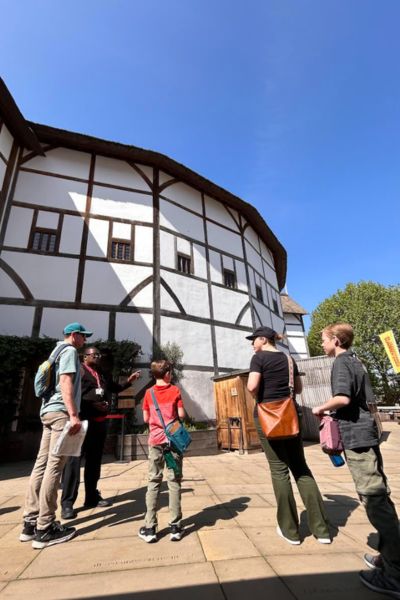
Many teenagers first meet Shakespeare in a classroom. And let’s be honest, that can sometimes feel like hard work. Visit Shakespeare’s Globe, though, and everything changes. Standing inside this open-air theatre - a faithful reconstruction of the original Elizabethan playhouse - makes Shakespeare’s world feel suddenly vivid and alive. Guides explain how audiences behaved in the 1600s (hint: they weren’t exactly quiet), how actors performed without microphones or lighting, and why theatre was such a huge part of everyday life.
The best part? If you time it right, you can watch a performance standing in the Yard as a “Groundling”, just like audiences did 400 years ago. It turns Shakespeare from something you study into something you experience.
Tate Modern - Art That Starts Conversations
Some art galleries can feel intimidating for teenagers. Tate Modern usually has the opposite effect. Set inside a vast former power station on the South Bank, the gallery specialises in modern and contemporary art that often sparks curiosity, debate and sometimes the question: “Wait… is that actually art?” For teens studying art, media or creative subjects, Tate Modern shows that art isn’t just about old paintings. It’s also about ideas, and sometimes very surprising ones.
Museum of the Home - The History of Everyday Life
History at school often focuses on kings, wars and political events. The Museum of the Home takes a completely different approach by exploring how ordinary people lived through the centuries. Visitors walk through rooms recreated from different periods, from the 1600s right up to the present day. Kitchens change. Furniture evolves. Technology slowly appears.
Suddenly teenagers can see how everyday life - cooking, cleaning, family life and even entertainment - has transformed dramatically over time. This kind of experiential learning is often the spark that helps a student connect with a subject back in the classroom.
Clink Prison Museum - Crime and Punishment Through the Ages
Teenagers tend to have a natural curiosity about the darker side of history. The Clink Prison Museum, located between Borough Market and the Tate, taps directly into that curiosity. Built on the site of one of England’s oldest prisons, it explores what justice looked like long before modern courts and prisons existed. Displays explain how criminals were punished, what prison life was like and how justice evolved over time. It’s slightly gruesome in places - which is probably why many teens find it fascinating.
The Old Operating Theatre - Medicine Before Painkillers (Brace Yourself)
Hidden in the roof of St Thomas’s Church near London Bridge sits one of the most unusual museums in London: The Old Operating Theatre Museum. You climb a tight spiral staircase and step into the Herb Garret, a wonderfully cluttered space filled with dried herbs, bottles and medical curiosities. Then you step into the operating theatre itself - Britain’s oldest surviving purpose-built operating theatre, built in 1822. It predates both anaesthetics and antiseptics, which means surgery here was fast, loud and often terrifying. For kids studying Victorian Britain, the history of medicine or how hospitals developed, it’s an unforgettable reminder of how far healthcare has come.
Across London you’ll find brilliant storytellers bringing the city’s past to life. Not just in museums, but on sightseeing buses, river cruises, theatre tours and stadium tours. Simon London – KidRated
Immersive History: London Dungeon & London Bridge Experience
Not every educational experience needs to feel like a museum visit. Some of London’s most memorable history lessons come from immersive attractions where actors bring the past to life. At the London Dungeon, performers guide visitors through dramatic scenes from London’s darker history, including the Great Plague and the Gunpowder Plot. It’s theatrical, funny and occasionally a bit creepy - which tends to make the stories stick. Nearby, the London Bridge Experience takes a similar approach, walking visitors through different periods of London’s history beneath the famous bridge.
The Monument - A Small Climb with a Big Story
Sometimes the simplest attractions are the most effective. The Monument to the Great Fire of London is exactly that. Inside the column is a narrow spiral staircase with 311 steps leading to a viewing platform at the top. It’s a bit of a workout, but along the way you learn about the devastating fire that swept through London in 1666 and how it changed the city forever. Plus, kids who make it to the top receive a certificate.
+(1).png)
Sports Stadium Tours - History Through Sport
If your teenager loves sport, stadium tours can be a brilliant way to connect learning with their interests. Clubs like Arsenal, Chelsea and Tottenham offer tours that take visitors through dressing rooms and players’ tunnels while explaining the history of the club and its role in the local community. Rugby fans can visit Twickenham Stadium, but one of our favourites is the Wimbledon Lawn Tennis Museum. It’s history but told through the lens of sport - which often resonates strongly with teens.
Don’t Forget London’s Unusual Side
One of the best things about London is that learning sometimes appears in the most unexpected places. There’s the London Mithraeum, an atmospheric Roman temple hidden beneath modern office buildings, or the slightly strange but fascinating Grant Museum of Zoology. It’s odd, memorable and oddly educational all at the same time.
Why Educational Days Out Work So Well in London
What makes London special is that so much of what children learn at school actually happened here. In the end, the trick with educational days out is simple: pick places where the story is strong and the experience feels real. Because when kids can stand in the room where surgery once took place, walk through a medieval prison, or step inside wartime command bunkers, the past stops feeling like homework. And that’s usually the moment when learning sticks.
About the Author: Simon London
Simon London is an award-winning producer, presenter and broadcaster. He is also the founder of KidRated.com, the family review platform where real kids rate days out, and regularly appears across television, radio and live events as a host, pundit and interviewer.