
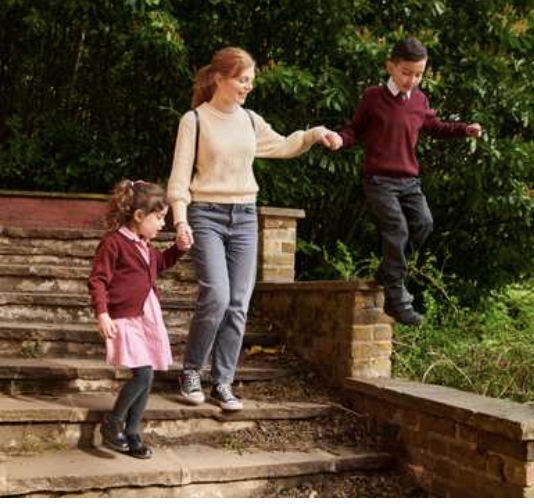
After-school childcare in the UK falls into three main categories: after-school nannies, who collect children from school and provide one-to-one care at home; childminders, who are Ofsted-registered and look after several children in their own home; and after-school clubs, which offer supervised group care at school or in the community. The three options differ significantly in cost, flexibility, and how well they suit your child's needs at the end of a long school day.
As founder of School Guide and a full-time working mum, one of the questions I'm most often asked is how to manage childcare after the school day ends. I've tried many combinations over the years but always quietly dismissed the idea of a nanny, assuming it would be too expensive, too paperwork-heavy and involve a year-round commitment I couldn't justify. What I hadn't appreciated is that an after-school nanny is a completely different proposition from a full-time nanny. Here we weigh up the pros and cons of all three after-school options to help you find the right fit for your family.
What are the main after-school childcare options?
Once a school place is confirmed, the question of what happens at 3.30pm tends to follow quickly. Here is a straightforward comparison of the three main options.
| After-School Nanny | Childminder | After-School Club | |
|---|---|---|---|
| Where care happens | Your home | Their home | School or community venue |
| Child to carer ratio | One to one | Several children | Often large groups |
| Flexibility | High | Medium | Low |
| Typical cost (2026) | From £16.50/hr all-in | £8 to £15/hr | £10 to £20 per session |
| Holiday cover | Term-time only (with Koru Kids) | Often yes | Term time only usually |
| Ofsted regulated | No (DBS checked) | Yes | Varies |
| Charged per | Family | Child | Child |
| Best for | Families wanting flexible, home-based, one-to-one care | Families wanting a regulated home-from-home setting | Families needing low-commitment or occasional cover |
What's the difference between an after-school nanny and a childminder?
A nanny comes to your home and cares for your children only. A childminder is Ofsted-registered and operates from their own home, usually looking after several children at once. A nanny is your employee; a childminder is self-employed. Both are valid options but suit very different families.
It is also worth understanding how an after-school nanny differs from a full-time nanny, because the two are not the same thing at all. A full-time nanny is contracted year-round, working long hours across the whole week, often including school holidays. An after-school nanny works a few hours a day from school pick-up, typically from as little as two or three afternoons a week, and through a service like Koru Kids, is contracted on a term-time only basis. The employment admin, which puts many parents off, is handled entirely by Koru Kids, including contracts, payroll, HMRC registration, pension and insurance, all built into the hourly rate.
As Rachel Carrell, founder and CEO of Koru Kids and mother of three, explains: "They compare the hourly price, but they're not doing the same job. A club gives your child a group activity until collection time. A childminder gives them a home to decompress in. A nanny handles the pick-up, snack, homework and prep. The right question isn't which is cheapest. It's what does your particular child need? Because a tired five-year-old and a sociable ten-year-old are very different."
What about after-school clubs?
After-school clubs, whether run by the school or independently, are the lowest-cost and lowest-commitment option. Since September 2025, the government has required all state primary schools to offer some form of wraparound provision, so availability has improved significantly.
However, school-run clubs tend to be activity-based rather than childcare-based. They are designed around a programme of sport, arts or other activities, rather than around the needs of working parents who need reliable cover until 6pm or later. For some children, particularly younger primary school age children who enjoy a structured group activity after school, they work well. For older KS2 children, many simply do not want to go to an after-school club after a long day, and the resistance can become a daily battle.
One practical point to note: after-school clubs are priced per child per session. For families with two or more children, the costs can add up quickly compared to an after-school nanny, who is priced per family.
What time do after-school clubs finish?
Most school-run after-school clubs finish between 4.30pm and 5pm. Some run until 6pm, but this is less common for school-organised provision and more typical of independent wraparound care providers operating on school premises.
For working parents with busy schedules, the hard finish time is one of the biggest practical drawbacks of after-school clubs. A number of schools have introduced late pickup charges, ranging from £6 per session to £1 per minute in some cases, to deter parents from arriving after the club's end time. These charges apply even if you are only a few minutes late, and can cause significant stress for parents whose working day does not always end at a predictable time.
Independent childcare providers running wraparound clubs on school premises tend to offer more flexible hours, often until 6pm, and are worth looking into if a school-run club's hours do not suit your working pattern.
Is it hard to find a good childminder for after-school hours?
The short answer is yes, and it is getting harder. At the end of March 2026, there were 24,700 childminders registered directly with Ofsted in England, down 630 from the previous year, a decline of around 2%. This follows a steeper drop the year before, continuing a longer post-COVID trend. The pressures of increased paperwork, Ofsted inspection stress and rising operating costs have led many experienced childminders to leave the sector.
For parents specifically looking for after-school slots, the challenge is even greater. Childminders generally prefer to fill their spaces with younger children who need longer hours across the full day, as a few hours of after-school care for a school-age child is rarely economical for them. Finding a good childminder willing to take an after-school slot in a popular area can feel like finding hen's teeth.
It is worth starting your search early and being prepared to go on waiting lists. The government introduced new flexibilities for childminders in November 2024, giving them more scope in where they can base their childcare, which may gradually improve availability in some areas. But for now, supply remains tight.

When should I start looking for after-school childcare?
As soon as you have a school place confirmed, ideally. September is the busiest time of year for after-school childcare enquiries, and the best nannies, childminders and club places in popular areas fill up quickly. If you are reading this in the summer, start now. Use our school start date calculator to check when your child is due to begin.
Through a service like Koru Kids, the typical timeline from signing up to having an after-school nanny in place is two to four weeks, which means leaving it until August can cut it very fine for a September start. For childminders, the lead time can be longer if you are joining a waiting list.
How much does an after-school nanny actually cost in 2026?
This is where many parents are surprised. The assumption that a nanny is a luxury does not always hold up when you look at the full picture.
Through Koru Kids, after-school nanny rates start from £16.50 per hour, all-in. That figure includes the nanny's pay, employer's National Insurance, pension contributions, insurance and the Koru Kids service fee. There is nothing hidden on top. You pay one monthly direct debit and Koru Kids handle everything else.
For a family needing three hours of after-school cover three days a week, the weekly cost is in the region of £150. Across a term, and bearing in mind you are not paying through the school holidays, this is often comparable to, or cheaper than, running two children through after-school clubs and childminder sessions.
Do I have to pay my after-school nanny through the school holidays?
With a Koru Kids after-school nanny, no. This surprises a lot of parents and it is one of the most significant practical differences between an after-school nanny through Koru Kids and a traditional nanny arrangement.
Koru Kids after-school nannies are contracted on a term-time only basis. You do not pay during the 13 weeks of school holidays per year, including the six-week summer, October half term, Christmas or Easter. You pay for the weeks your child is actually in school.
This is different from a traditional full-time nanny, who is contracted year-round and must be paid through all school holidays, either at their normal rate or at an agreed reduced rate. That distinction alone changes the annual cost comparison significantly, and it is one of the things most parents do not ask about until it is too late.

Is an after-school nanny or a childminder better for my family?
It depends on your child and your working pattern.
An after-school nanny suits families who want home-based, one-to-one care, flexibility around pick-up times and activities, and a consistent person their child knows and trusts coming to them at the end of the day. It particularly suits families with more than one child, since the cost is per family not per child, and families whose working hours make hard club finish times impractical.
A childminder suits families who want a regulated, Ofsted-inspected setting, a consistent small group of other children for company, and a slightly lower hourly rate, provided you can find one with an after-school slot available.
An after-school club suits families who need low-commitment or occasional cover, or whose child genuinely enjoys a busy group environment after school.
As Rachel Carrell also explains: "By 3.30pm, most children are feeling tired, hungry and ratty. That's normal. A really good after-school nanny understands that and builds the afternoon thoughtfully. Food first, then time to decompress, then homework or activities once the child is actually ready. Over a school year that adds up to hundreds of hours of one-to-one adult attention at exactly the point in the day when children need it most. Our families tell us it is really transformative to the overall calm feeling in the household."
Frequently asked questions
What is the difference between an after-school nanny and a childminder?
A nanny comes to your home and provides one-to-one care for your children only. A childminder is Ofsted-registered and looks after several children in their own home. A nanny is employed by the family; a childminder is self-employed.
How much does an after-school nanny cost in the UK in 2026?
Through Koru Kids, after-school nanny rates start from £16.50 per hour, all-in, including employer NI, pension, insurance and the service fee.
Do I have to pay my after-school nanny during school holidays?
With a Koru Kids after-school nanny, no. They are contracted term-time only, so you do not pay during the summer holidays, half terms or Christmas break.
What age children can an after-school nanny look after?
After-school nannies typically care for primary and secondary school-age children, from around four or five upwards.
Is a childminder cheaper than an after-school nanny?
The hourly rate for a childminder is often lower, but childminders charge per child. For families with two or more children, an after-school nanny can work out cheaper overall, and provides one-to-one home-based care.
When should I start looking for after-school childcare?
As soon as you have a school place confirmed. September places fill up quickly, and leaving it until the summer can mean missing the best options.
Koru Kids matches families with DBS-checked, vetted after-school nannies across the UK. Rates start from £16.50 per hour, all-in. Find an after-school nanny near you.